

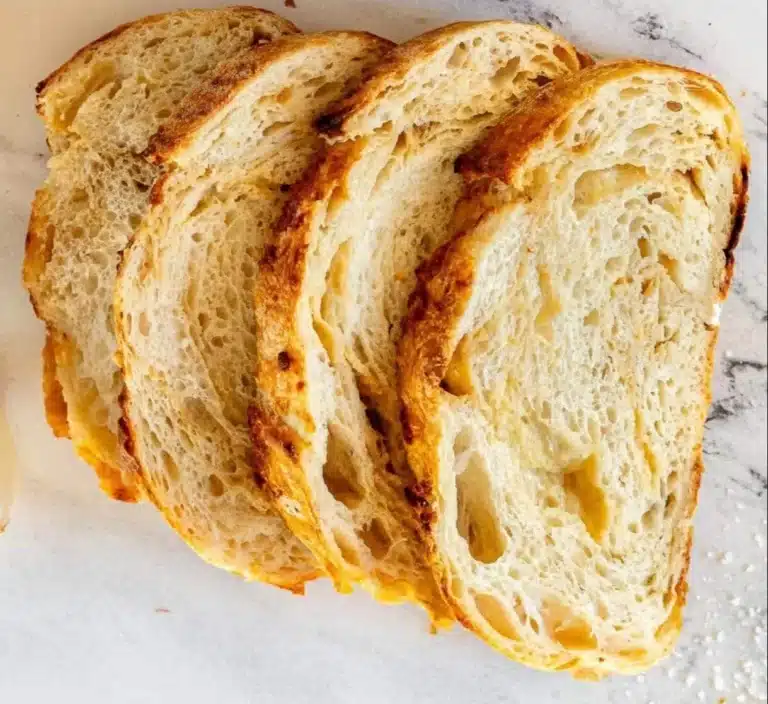
This delicious recipe combines the rich sweetness of caramelized onions with the creamy texture of Gouda cheese, all wrapped up in the delightful tang of sourdough bread. Whether you’re enjoying it fresh out of the oven or toasting it for a savory breakfast treat, this bread hits all the right notes. It’s an excellent way to use up a sourdough starter discard and adds an exciting twist to your usual bread-making routine.
Why you’ll love this dish
The combination of flavors in this bread is simply divine. The caramelized onions lend a deep, savory richness, while the Gouda adds a subtle creaminess that makes each bite melt-in-your-mouth delicious. Bake it at home, and your kitchen will be filled with the irresistible aroma of freshly baked bread.
"This bread was a game changer! The flavors are incredible and it made great sandwiches."
With its unique flavor profile and texture, this bread is perfect for special occasions or just an everyday treat. It’s not only delightful to eat but rewarding to make, transforming simple ingredients into a bakery-quality loaf.
How it comes together
This recipe is straightforward and follows a traditional sourdough method. You start by caramelizing your onions to enhance their flavor. While they cool, you’ll prepare the dough with your sourdough starter and Gouda cheese, combining everything into a beautifully textured bread dough. After a rise, shape the loaves, allow them to rise again, and then bake until golden and crusty.
Prep Time: 30 min | Cook Time: 40 min | Total Time: 1 hr 10 min
What you’ll need
- 1 cup sourdough starter (active or discard)
- 2 cups all-purpose flour
- 1 cup whole wheat flour
- 1 tablespoon sugar
- 1 teaspoon salt
- 1 cup warm water
- 1 cup Gouda cheese, shredded
- 1 large onion, sliced
- 2 tablespoons olive oil
- Optional: herbs like thyme or rosemary for added flavor
Tip: If you can’t find Gouda, a mix of Gruyère or Havarti works wonderfully too.
Step-by-step instructions
- In a skillet, heat olive oil over medium heat. Add sliced onions and sprinkle with a pinch of salt. Cook until they are golden and caramelized, about 15-20 minutes, stirring occasionally.
- In a large mixing bowl, combine sourdough starter, warm water, sugar, and salt. Mix until well combined.
- Gradually add both flours, mixing until a shaggy dough forms. Knead briefly until smooth, then fold in caramelized onions and Gouda.
- Place the dough in a lightly oiled bowl, cover it, and let it rise until doubled, about 2-4 hours.
- Once risen, shape the dough into loaves and place in greased pans or on a baking sheet. Cover and let rise for another hour.
- Preheat your oven to 425°F (220°C). Bake the loaves for 30-40 minutes or until golden brown and hollow sounding when tapped on the bottom.
- Cool on a wire rack before slicing.
Best ways to enjoy it
This bread is incredibly versatile. Serve it warm with butter for a comforting snack, or pair slices with hearty soups or salads for a satisfying meal. Enjoy it as toast topped with avocado and a sprinkle of sea salt, or turn it into a fantastic sandwich stuffed with roasted vegetables and cheese.
Storage and reheating tips
To store your bread, wrap it tightly in plastic wrap or aluminum foil and keep it at room temperature for up to 3 days. For longer storage, consider freezing the bread — slice it first for easy defrosting. Simply toast or reheat in the oven at 350°F (175°C) for a few minutes to restore its crispy crust.
Helpful cooking tips
When caramelizing onions, patience is key! Low and slow cooking allows the natural sugars to develop, producing that lovely sweetness. Make sure to stir them occasionally to prevent burning. If your dough is too sticky, add a touch more flour, but be careful not to over-flour, as you want a moist bread.
Creative twists
Feel free to add different ingredients to tailor the bread to your taste. Chopped herbs like rosemary or thyme can complement the sweetness of the onions beautifully. For a gourmet touch, try mixing in some chopped olives or sundried tomatoes for a Mediterranean flair.
FAQ
Can I use regular yeast instead of a sourdough starter?
Yes, if you don’t have sourdough starter, you can substitute an equivalent amount of instant yeast. Reduce the water slightly, as you won’t need the moisture for fermentation.
How can I tell when the bread is done baking?
Bread is done when it sounds hollow when tapped on the bottom and has a golden-brown crust. You can also use a thermometer; the internal temperature should reach about 190°F (88°C).
What if I don’t have time to let the dough rise for hours?
You can let the dough rise in a warm area or even use the oven with the light on to speed up the fermentation. Alternatively, you can let it rise in the fridge overnight for depth of flavor, just bringing it back to room temperature before shaping.